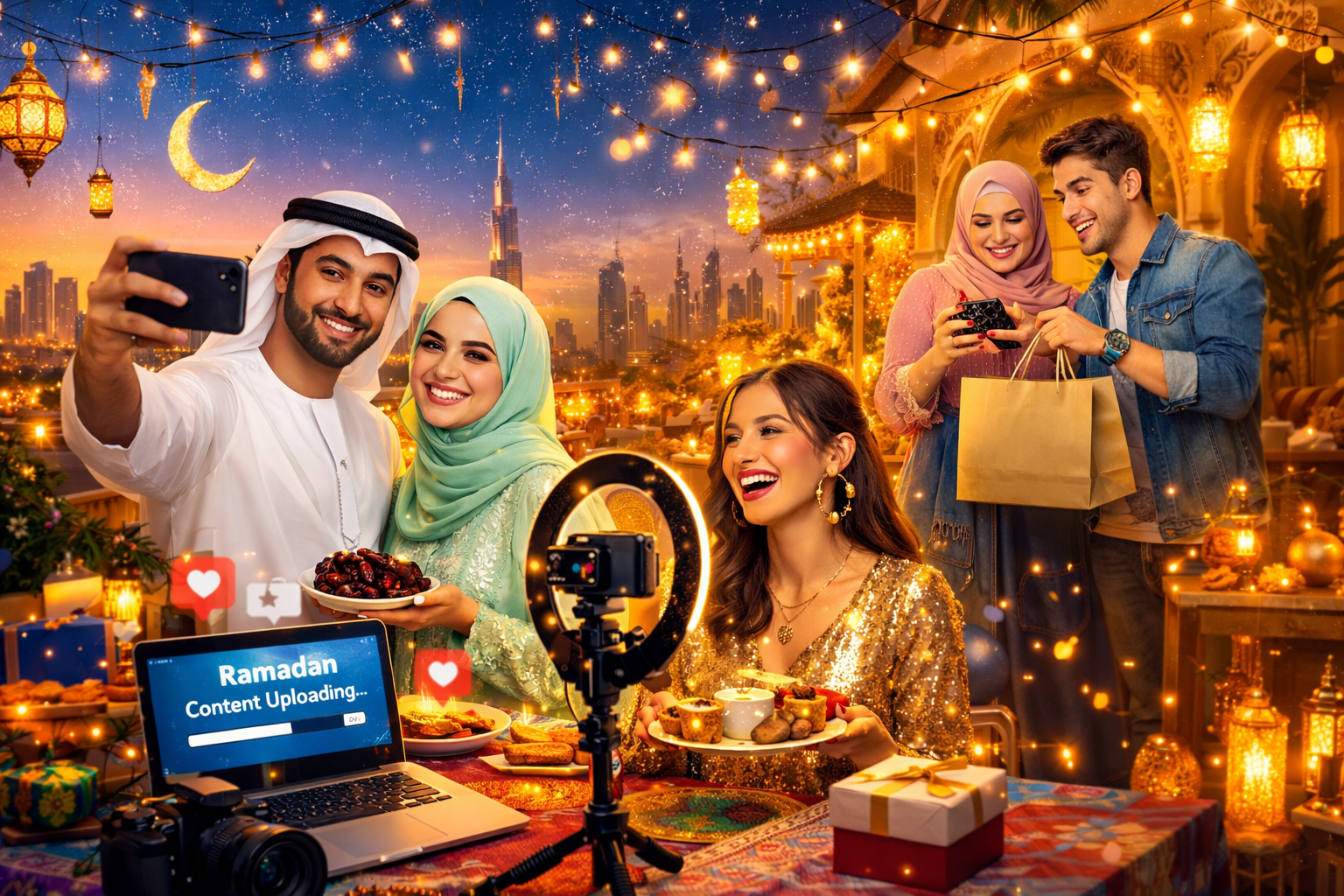
Have you ever scrolled through your feed at 3 AM during Ramadan and thought, “wow, everyone is out here cooking, praying and unboxing Eid gifts”? The holy month isn’t just about fasting – it totally flips the social‑media vibe in the United Arab Emirates. Below is a simple, playful guide on how Ramadan rewrites the influencer playbook and why your FYP is suddenly full of lantern emojis and charity links.
📈 More Screens, More Feels
Ramadan is when people in the UAE stay up late, hang with family and friends and scroll… a lot. During the holy month there is a 30 % jump in social‑media use and interactions spike 43 % between 7 PM and 3 AM – basically the times everyone is chilling after Iftar, Taraweeh or suhoor. Even apps like Netflix and YouTube see more love; 65 % of residents use streaming platforms more during Ramadan.
Brands and influencers don’t ignore this. Shopping app downloads shot up 126 % in the UAE during Ramadan 2024 and entertainment and gaming installs spiked too. Users check ads right after breaking fast or just before sunrise, so expect influencers to drop their collabs during those golden hours.
🕓 Quick question: What time do you normally scroll during Ramadan? After Iftar? Before suhoor? Let us know!
🧑🤝🧑 Influencers Turn Up – But With Heart
Influencers aren’t just posting outfit inspo – they’re leaning into values. Data shows 78 % of consumers prefer campaigns that are culturally relevant and 80 % of Muslims want messaging about family relationships. During Ramadan many creators switch to content about:
-
🌙 Family and spirituality: Cooking Iftar recipes with grandma, prepping Eid gifts and filming Taraweeh nights. Social‑media conversations flood topics like food, prayer and Iftar.
-
🎁 Giving back: Influencers team up with charities or start donation drives because 64 % of UAE consumers prefer brands that take part in Ramadan philanthropy. Finance apps even see an 8 % increase in sessions from donations.
-
🎮 Short, snappy videos: People love quick clips; around 79 % of viewers watch content under 10 minutes. That’s why TikTok challenges, IG Reels and live streams are everywhere.
Authenticity is key: 69 % of consumers trust influencers, friends and family more than straight‑up ads and micro‑influencer recommendations convert 20 % better. So if your fave blogger is raving about a charity or new baklava spot, chances are it’s genuine – or at least they know you’ll vibe with it.
🕒 Timing Is Everything
So when should you drop that brand deal or #IftarWithMe reel? Stats show that Ramadan follows a pattern:
-
7 PM – 12 AM: Post‑Iftar, people relax and catch up on socials. Engagement peaks here.
-
12 AM – 3 AM: Night owls, gamers and suhoor crew are still online.
-
Early morning: Some wake early for suhoor; finance‑app sessions and donations trend here.
Creators plan their content around these windows. Many schedule posts just before Iftar or at suhoor because ads see nearly half of their clicks after 7 PM and even 4 AM sales jump 17 % higher than usual. If you’re launching a Ramadan campaign, set your premiere accordingly.
💸 Shopping & Social Commerce Surge
Ramadan isn’t just about fasting; it’s also a shopping season. Over 53 % of consumers in the MENA region increase their spending during the holy month and 83 % of shoppers are open to trying new brands. Plus, 35 % of people say creator‑led content directly influences their purchases.
That’s why you see flash sales, giveaways and #EidGift guides all over your feed. The influencer market in the UAE alone is booming – valued at US$276 million with over 11 million active social‑media users. People spend 7.2 hours per day scrolling, and 72 % of UAE consumers trust influencers more than traditional ads. When your fav beauty blogger drops a discount code, there’s a reason you add those products to your cart.
🌍 The Rise of Micro‑Influencers & Local Voices
Here’s another twist: bigger isn’t always better. The Gulf has seen explosive growth in the creator economy, with over 263,000 influencers in the region – a 75 % jump since 2023. But many brands prefer micro‑creators because they feel more real. Micro‑influencers drive 20 % more conversions and 82 % of followers are likely to act on their recommendations.
Language matters too. Arabic content sees 35 %–50 % more engagement than translated English, so expect more Arabic captions, prayers and colloquial slang. This localised vibe resonates with Gen Z audiences who crave authenticity and cultural connection.
🎤 Sound off: Who’s your favorite local creator to watch during Ramadan? Tag them and spread the love!
🤝 Tips for Brands & Creators
If you’re planning a campaign or just want to up your Ramadan content game, here are some tips drawn from industry pros:
-
Align with values: Share stories of family, community and generosity. Most people want culturally relevant messaging. Don’t shoehorn random products – show how they fit into Ramadan life.
-
Time it right: Post after Iftar and before suhoor. Schedule livestreams or giveaways when your audience is awake.
-
Go video‑first: Short‑form clips and live streams drive huge engagement. Think TikTok challenges, recipe tutorials or behind‑the‑scenes charity work.
-
Support good causes: Partner with charities or encourage donations. A significant number of consumers look for philanthropic brands during Ramadan.
-
Choose the right influencers: Micro‑influencers often have deeper relationships with followers. Look for creators who genuinely resonate with your brand values.
During Ramadan, the UAE’s social‑media scene is lit – and it’s not just because of decorative lights. People are more engaged, more generous and more open to discovering new brands and creators. From midnight recipe reels to donation challenges, influencers play a huge role in shaping the conversation. Keep your content authentic, mindful and fun, and you’ll not only ride the wave – you’ll help make the holy month even more meaningful.
Your turn: What’s one trend or post you look forward to every Ramadan? Share it – we can’t wait to see your insights!